The Teardown
A 6 unit that looked like a 10 percent cap. Here is why the read said walk.
Fernando, founder of Senjo · 7 min read
TL;DR
I ran a live 6 unit listing through Senjo to see what the read would say. On the surface it looked strong: six doors, healthy gross rent, and a seller's cap rate near 10 percent. Under a real read it fell apart. The actual cap was 6.1 percent, the property did not cover its own debt at a 0.94x DSCR, and it bled about 250 dollars a month. When Senjo priced every financing structure, none of them cleared at the asking price. The number that works sat 85 to 140 thousand below the ask, on a listing three weeks old with no seller pressure. That is a walk, and walking was the win.
What looked good on the surface?
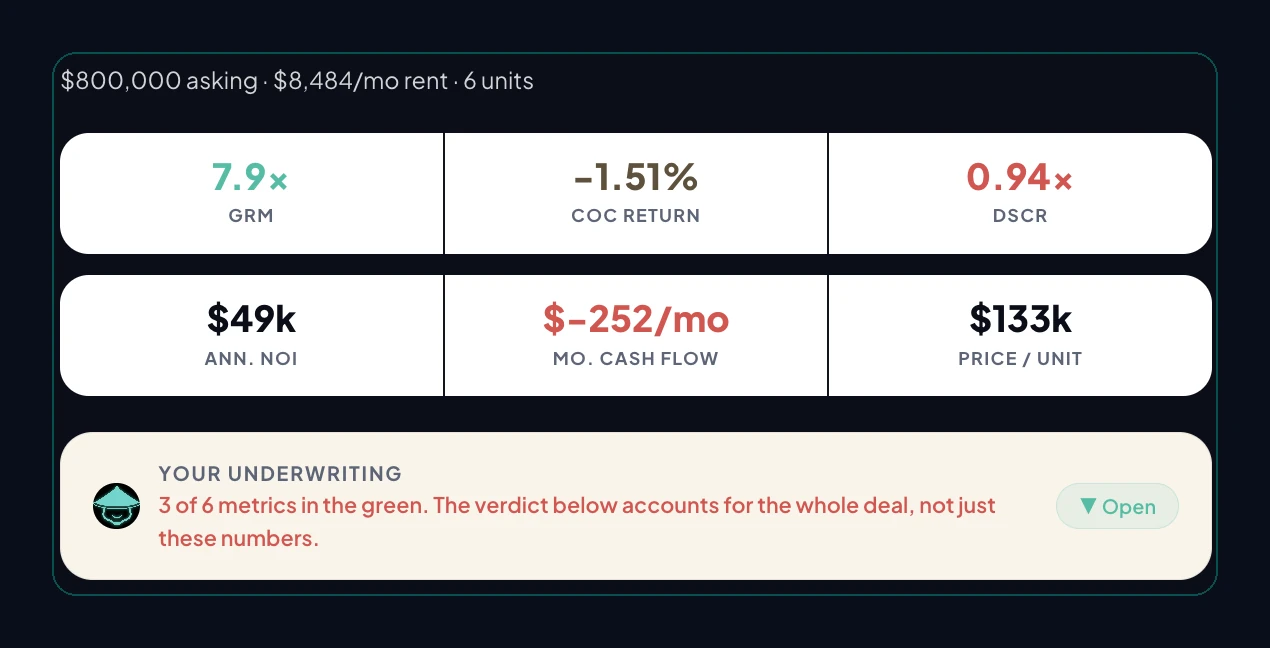
On the surface this looked like a strong buy, which is exactly why it is worth taking apart. A 6 unit at 800,000 dollars, six doors of rent diversification, and about 8,500 dollars a month coming in. The seller's own math implied a cap rate near 10 percent, the kind of number that makes you open the listing twice.
So I ran it through Senjo, and everything in the cards below is the tool's actual output, not a mockup. The dashboard came back with only three of six metrics in the green, and two of the reds were the ones that decide a deal: a negative monthly cash flow and a DSCR under 1.0. The surface story started falling apart before I got past the top line. The gaps were the usual ones, the same lines most first-timers miss.
What did not survive a second look?
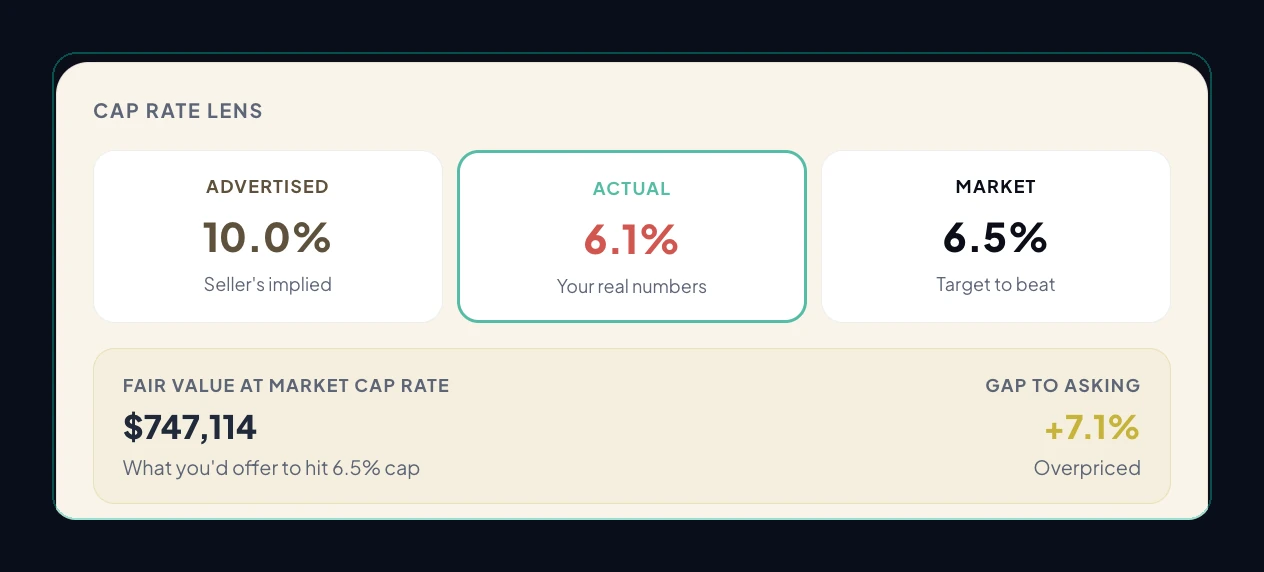
The cap rate. The seller's implied 10 percent was a marketing number, built on the best case version of the income. Rebuilt on the real rents, a real vacancy factor, and a full expense load, the actual cap came in at 6.1 percent, below the 6.5 percent the market was paying for similar assets.
So the pitch inverted. Instead of a double-digit yield, you were being asked to pay a premium for a below-market one. Even the fair value at a market cap rate, about 747,000 dollars, sat below the 800,000 dollar ask. The price was wrong before the financing entered the picture.
What was the number that ended it?
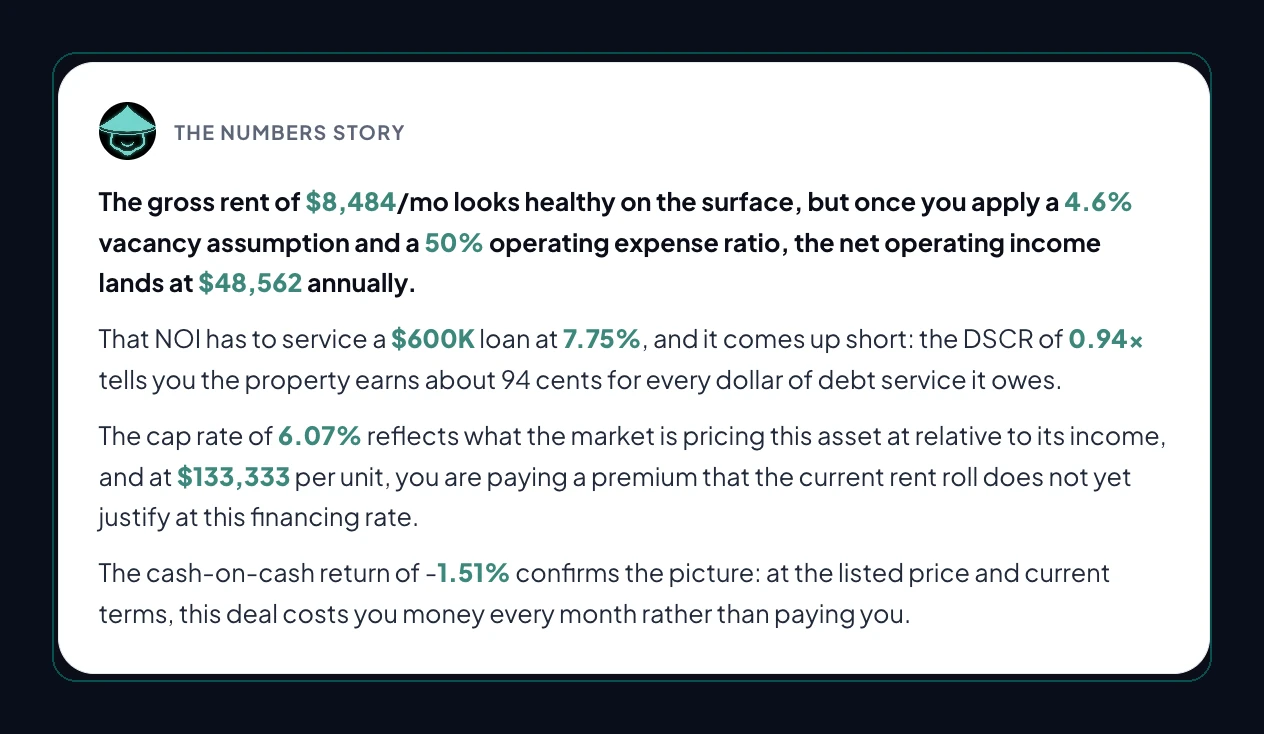
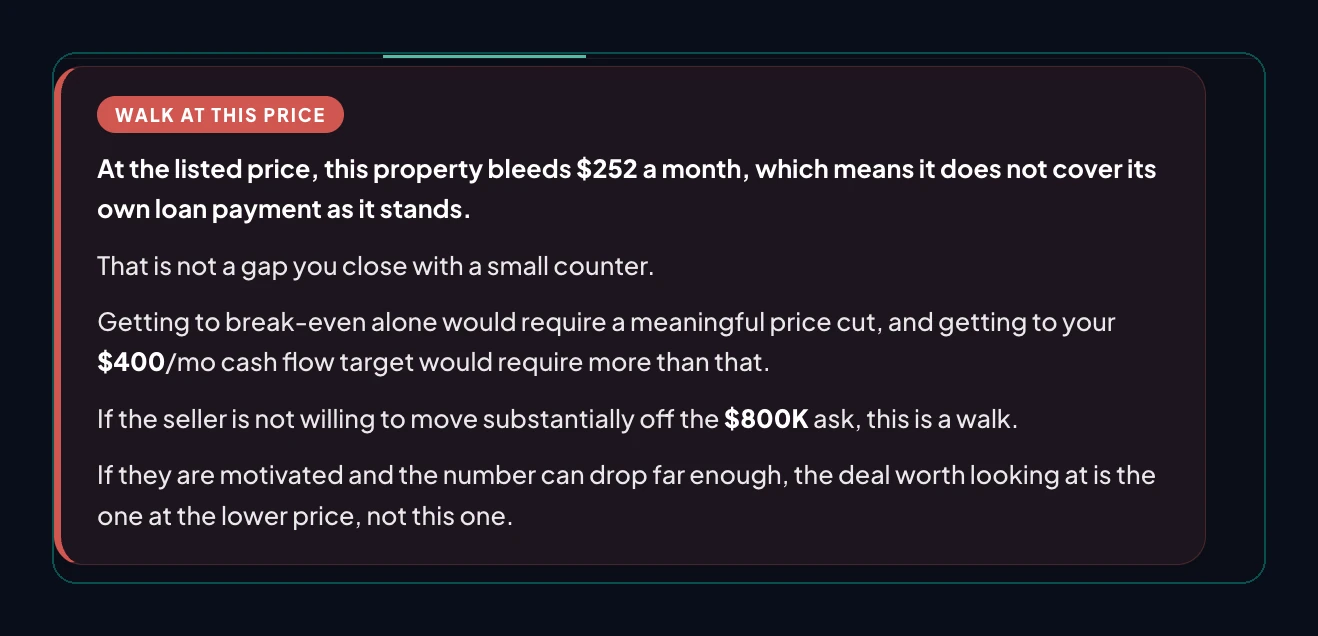
The DSCR, at 0.94x. That means the property earns 94 cents for every dollar of debt service it owes, so it does not cover its own loan. At the asking price it bled about 250 dollars a month.
Part of that is structural: a 6 unit is a commercial property, so the conventional path a W-2 buyer would use closes above four units, and the deal defaulted to a DSCR loan at 7.75 percent. That is expensive money, and on an asset earning a 6 percent cap, the debt costs more than the building earns, so borrowing actually works against you. That is what negative leverage means, and the cash-on-cash return of negative 1.5 percent confirms it: at this price and these terms, the deal costs you money every month instead of paying you. The deal did not stand on its own.
Could any financing save it?
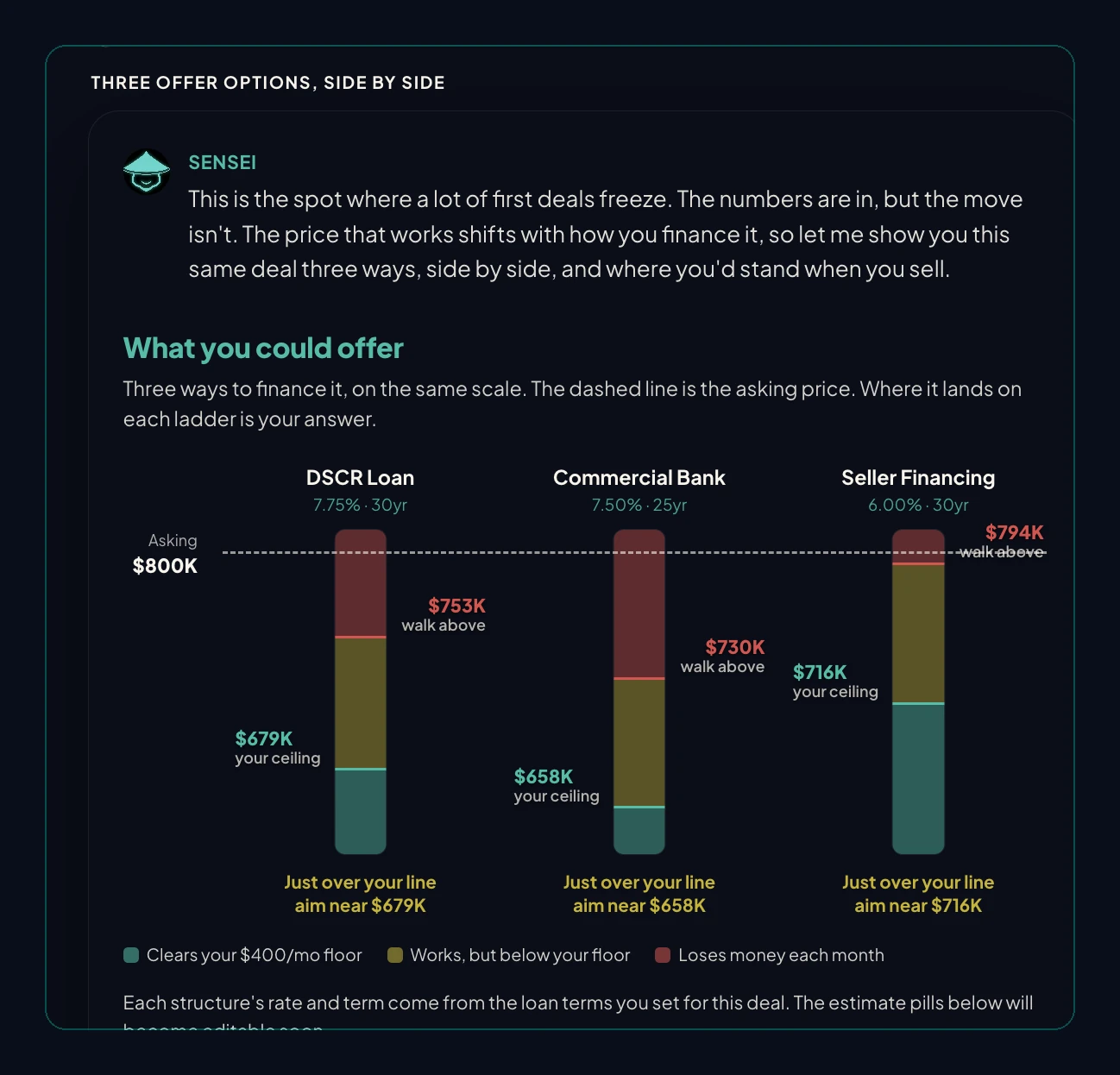
This is the part that turned a maybe into a walk. Senjo priced the same deal three ways and put them on one scale. A DSCR loan topped out around 679,000 dollars before it stopped clearing my cash flow floor, a commercial bank loan around 658,000, and even seller financing at a soft 6 percent rate only reached about 716,000. Every ceiling sat below the 800,000 dollar ask.
There was no way to finance a path to a deal that works at this price. To make it pencil you needed something like 85,000 to 140,000 dollars off, depending on the structure. That is not a financing problem you solve. That is a price problem the seller has to solve, and had not.
So why walk instead of negotiate?
Because the gap was too big and the leverage was wrong. Getting to a price that works meant talking the seller down 85,000 to 140,000 dollars on a listing that had been up for three weeks, where they had felt no pressure yet. Add a 1971 build, which carries real risk on systems you cannot see from a listing, the roof, the plumbing, the electrical, and the case for chasing it thins to nothing.
This was never a 10,000 dollar counter. Senjo called it a walk at this price, and the numbers back it: the price that works sits far below the ask, on every path. Walking is not giving up here, it is the correct read. The capital and the attention go to a deal that already works, instead of a months-long effort to rescue one that only breaks even if everything goes right.
The read, at a glance
| Asking price | $800,000 |
| Seller's implied cap | 10.0% |
| Real cap | 6.1% |
| DSCR | 0.94x |
| Monthly cash flow | - $252 |
| Highest price that clears the floor | ~$716,000 |
Real figures from a live 6 unit listing run through Senjo. The address and any personal details are withheld. The point is the gap: on every financing path, the price that works sits well below the ask.
Frequently asked
What is the difference between the advertised cap rate and the real cap rate?
The advertised cap rate uses the seller's best case income. The real cap rate uses the actual rents, a real vacancy factor, and full operating expenses. On this deal the advertised number was near 10 percent and the real one was 6.1 percent. Always rebuild it before you trust the yield.
Can better financing fix a deal that does not cash flow?
Sometimes, but not when every financing structure's price ceiling sits below the asking price, which was the case here. If the deal only works well under the ask on every path, the problem is the price, not the loan.
Is a DSCR below 1.0 always a walk?
Not always. A DSCR under 1.0 means the property does not cover its own loan, so it needs a lower price or better terms to work. When the required cut is 10 to 18 percent and the seller has no reason to move, it usually is a walk.
Why walk instead of making a low offer?
You can make a low offer, but on a listing that is three weeks old a seller rarely drops 15 percent. Walking frees your capital and attention for a deal that already works, which is usually the better use of both.
Senjo is an AI sensei for solo multifamily investors. Fernando, its founder, owns two single family rentals and is working toward his first small multifamily deal, building the tool he needed when he got stuck between the two.