The One Number
What is a good operating expense ratio for a small multifamily?
Fernando, founder of Senjo · 6 min read
TL;DR
The operating expense ratio is operating expenses divided by gross rent. Plan for 45 to 50 percent on a small multifamily once management and reserves are in, even when a listing shows 30 to 40. A seller's pro forma looks efficient because it omits management, omits reserves, and uses old taxes instead of your reassessed bill. On the illustrative deal below, rebuilding those lines took a 23 percent ratio to 44 percent, cutting net operating income by 12,600 dollars and about 210,000 dollars of value at a 6 percent cap.
What is a good operating expense ratio for a small multifamily?
For a small multifamily, plan for operating expenses of roughly 45 to 50 percent of gross rent once management and reserves are in, even if a listing shows 30 to 40. The operating expense ratio is your annual operating expenses divided by your gross rental income. It tells you how many cents of every rent dollar the building spends before debt, and a lower ratio means more net operating income, which is what drives value.
The old rule of thumb, the 50 percent rule, says operating expenses on a small rental tend to run about half of gross rent. Newer buildings with low taxes can run lower. Older buildings, or ones with water and heat on the owner, run higher. The generic ranges you see online, 35 to 50 percent in one guide and 60 to 80 in another, disagree because they are describing different buildings and sometimes different definitions.
The number that matters is not the average. It is the one you rebuild for the specific building in front of you.
Why does a listing's expense ratio look so low?
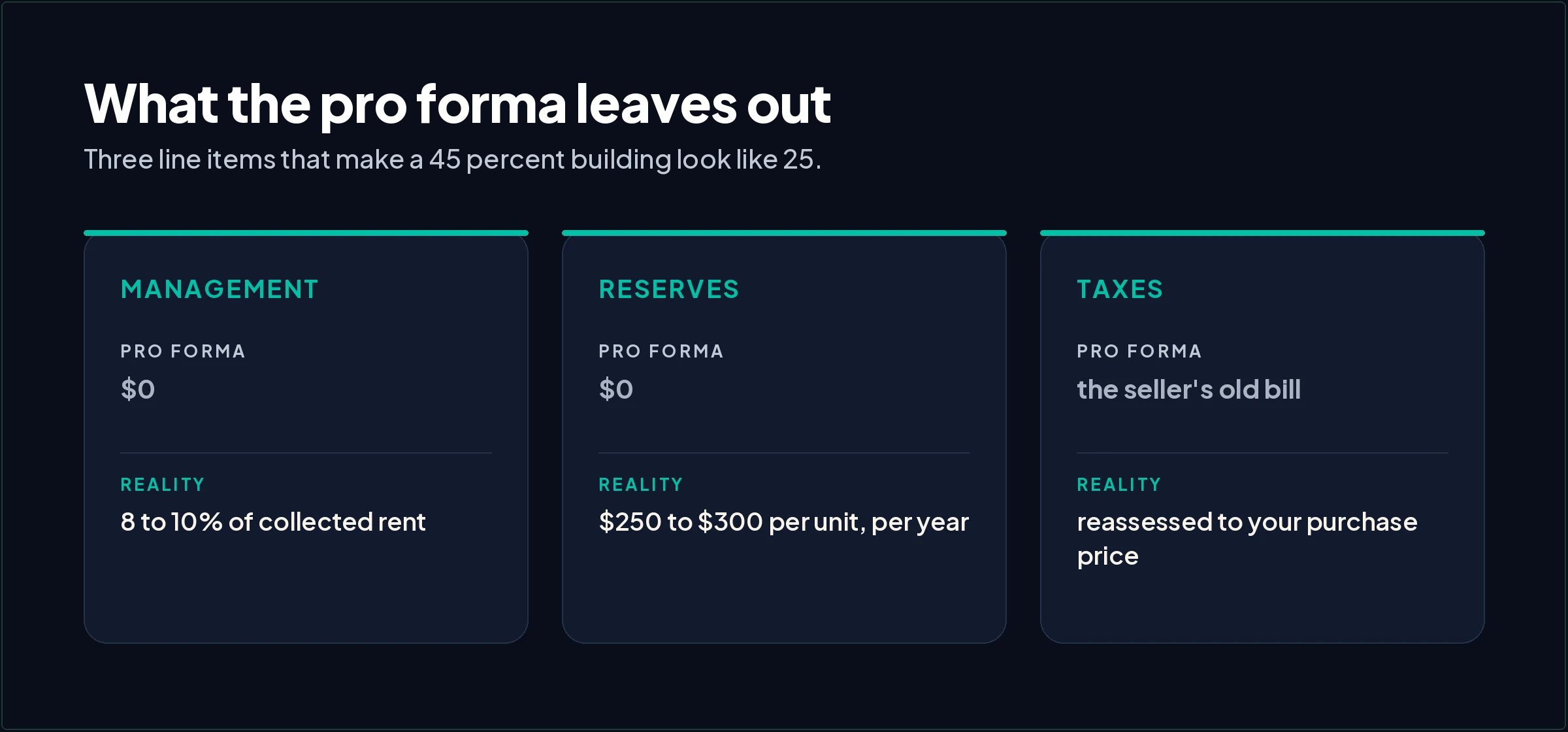
Because a seller's pro forma is built to show a high net operating income, so it usually leaves out property management, leaves out capital reserves, and uses the property taxes the seller pays today rather than the ones you will pay. Those three omissions are what make a 45 percent building look like a 25 percent building. Three things to watch.
Management: the pro forma assumes you self-manage and shows zero, but a market rate is 8 to 10 percent of collected rent, and your time is not free.
Reserves: capital items like roofs, water heaters, and turnovers are real and recurring, but a pro forma often sets aside nothing for them.
Taxes: the seller shows their current bill, based on an assessment from when they bought, and many counties reassess to your purchase price after a sale, which can raise the tax line by half or more.
None of this is dishonest on its own. It is optimistic. Your job is to price the optimism out, and the same optimism hides in the other lines you miss when you underwrite the whole deal.
How do you rebuild the expense ratio in sixty seconds?
Rebuild the four line items a pro forma usually gets wrong, then divide by gross rent again. Reassessed taxes, management at market, real reserves, and honest repairs. That is the whole check.
Taxes: replace the seller's bill with your purchase price times the local tax rate. Both numbers are public.
Management: add 8 to 10 percent of collected rent, even if you plan to self-manage, because if you would not do it for free for someone else, it is a cost.
Reserves: set aside for capital items, and a common starting point is 250 to 300 dollars per unit per year, more for an older building.
Repairs and vacancy: use realistic figures, not the best year, so a real maintenance number and a vacancy allowance rather than a placeholder.
Add them back, divide by gross rent, and you have the ratio you will actually live with.

What does the gap actually cost you?
More than it looks, because a building is priced off the income it produces after expenses, so hiding expenses quietly inflates the price. A small gap in the yearly income turns into a large gap in value. Here is the plain version. A buyer is really buying the income the building throws off after its running costs, its net operating income. Two buildings with the same rent are not worth the same if one quietly costs more to run.
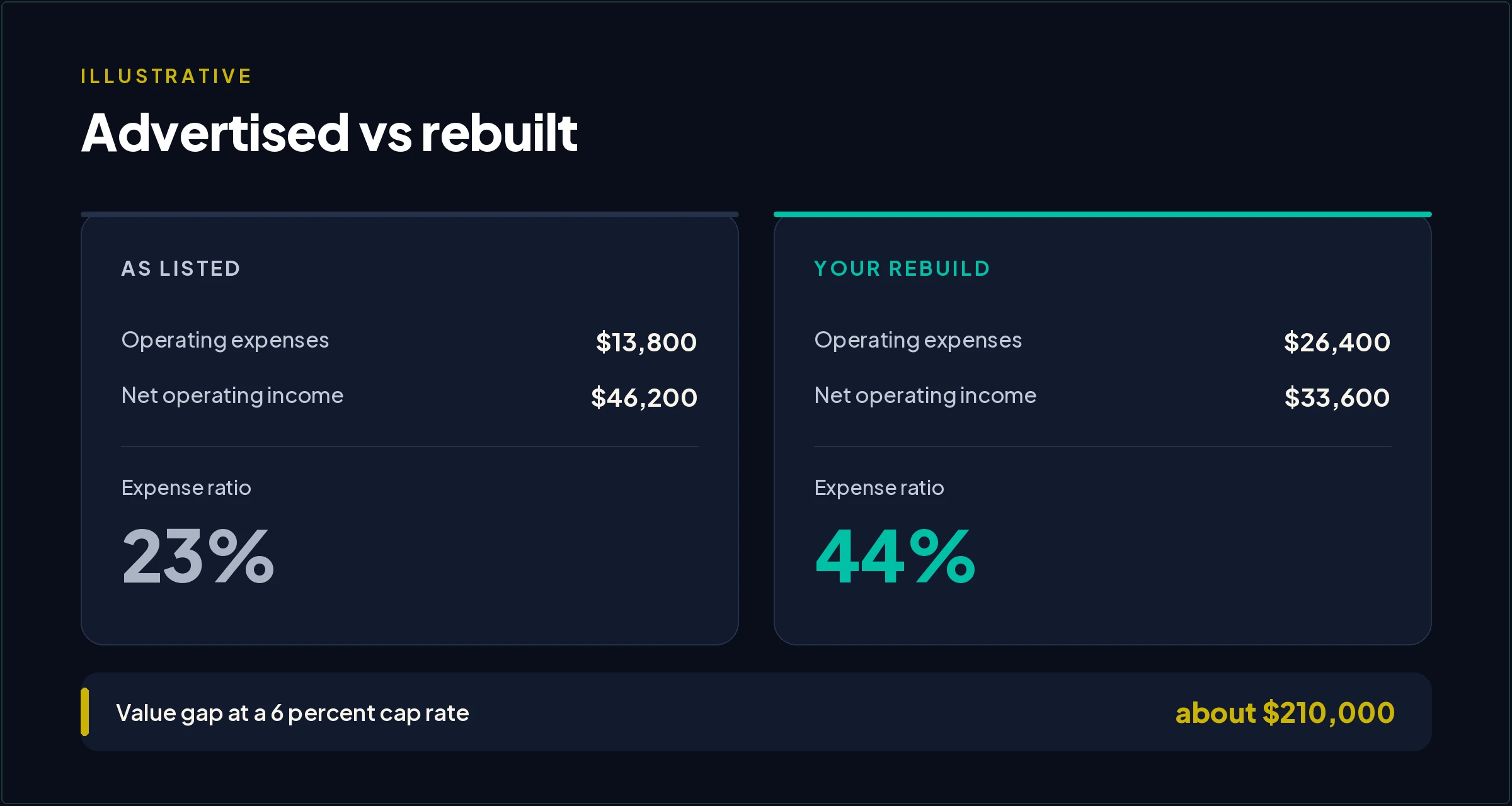
When a pro forma leaves out management, reserves, and the real tax bill, it makes that income look bigger than it is, and the asking price rides on the inflated number. Take an illustrative four unit, laid out in the panel. Nothing about the building changes. Once the three missing costs go back in, its yearly income drops from 46,200 dollars to 33,600, a 12,600 dollar hole that repeats every year you own it.
Now turn that into price. Small multifamily tends to trade around a 6 percent cap rate, which is just a way of saying a buyer pays roughly 17 dollars for every dollar of yearly income. So a 12,600 dollar hole in the income is about 210,000 dollars off what the building is worth. It is the same net operating income you rebuild for a real cap rate. An advertised 23 percent expense ratio that is really 44 percent is not an accounting quibble. It is what you take off your offer.
Why your expense ratio is not the seller's
Because the right expenses depend on you: the taxes at your purchase price, whether you plan to manage the building yourself, and what you set aside for capital items. A blank calculator asks you none of that. It hands the same average to everyone.
That is the difference between a calculator and a coach. Senjo reads the deal against your profile and coaches the call, so you are weighing the number against your situation, not a blank template. The math is quick. Knowing which number to trust is the part that needs context.
Worked example, illustrative
| Gross rent | $60,000 |
| Advertised operating expenses | $13,800 |
| Advertised expense ratio | 23% |
| Rebuilt operating expenses | $26,400 |
| Rebuilt expense ratio | 44% |
| Rebuilt net operating income | $33,600 |
| Value gap at a 6% cap rate | about $210,000 |
Illustrative four unit, rounded for teaching. The three line items a pro forma usually omits, reassessed taxes, management, and reserves, drive almost the entire swing.
Frequently asked
What is a good operating expense ratio for a rental property?
Plan for roughly 45 to 50 percent of gross rent on a small multifamily once management and reserves are included. Newer buildings with low taxes can run lower, older buildings higher. Treat any single average as a starting point, not the answer for your building.
How do you calculate the operating expense ratio?
Divide annual operating expenses by gross rental income. Operating expenses exclude the mortgage and exclude one-time capital projects, but they should include management and a reserve for recurring capital items.
Why is a seller's expense ratio usually too low?
Because a pro forma is built to show a high net operating income. It commonly omits property management, omits capital reserves, and uses the seller's old tax bill instead of the reassessed taxes you will pay after the purchase.
Does the operating expense ratio include the mortgage?
No. Operating expenses stop before debt service. The mortgage is handled separately, which is why the same building can show one expense ratio and very different cash flow depending on the loan.
What is the 50 percent rule?
A rule of thumb that operating expenses on a small rental tend to run about half of gross rent. It is a sanity check, not a substitute for rebuilding the actual line items, but it is a fast way to catch a pro forma that claims 25 percent.
Senjo is an AI sensei for solo multifamily investors. Fernando, its founder, owns two single family rentals and is working toward his first small multifamily deal, building the tool he needed when he got stuck between the two.