The Freeze
Why do I freeze before sending an offer, even when the deal pencils?
Fernando, founder of Senjo · 5 min read
TL;DR
A deal can pass every test and you still cannot send the offer. The freeze is almost never a math problem. It is the cost of deciding alone, with no second read you trust at the one moment it matters. Most investors freeze for one of three reasons: a number they are not sure they ran right, a downside they cannot size, or no one to confirm the call. A second read on the deal, at the moment of decision, is what moves it.
Why do good deals freeze at the offer?
Because the cost of being wrong feels larger than the cost of doing nothing, and there is no one in the room to confirm the read. The math says go and you still do not move. I am working toward my first small multifamily deal, and I have also had an LOI drafted and sitting unsent, more than once. The deal was usually fine. The thing that was not ready was me.
Waiting felt like the safe choice each time, but waiting is a choice too, and it is the one that quietly kills the most deals. A deal you do not act on is gone just as surely as one you lose in negotiation.
Is the freeze about the numbers?
Almost never. By the time you have a drafted offer, you have run the numbers, usually more than once, so the freeze sits after the math, at the decision. Look at the illustrative 6 unit below. The real cap rate clears the target, the cash flow is positive after debt service, and the DSCR is above what a lender wants.
Every line says go, and you can have all of that in front of you and still not send the offer. That is the whole point. If the freeze were a math problem, the math would have already solved it.
Where do investors freeze, and why?
In one of three places, and naming yours is most of the work, because the freeze feels like one wall when it is usually one of three with different fixes.
First, a number you are not sure you ran right, often the real cap rate, the property taxes after they reassess at your purchase price, or the vacancy factor. The fix is to re-run that one number, not the whole model.
Second, a downside you cannot size, the vague what-if with no figure attached. The fix is to write the worst case in dollars, because a vacant unit for three months has a number and an unsized fear does not, which is why it grows.
Third, no one to confirm the call. The mentor is busy, the community thread is slow, and a spreadsheet cannot reassure you. This is the most common one and the hardest to solve alone, because it is the one thing you cannot give yourself.
Where does Senjo fit?
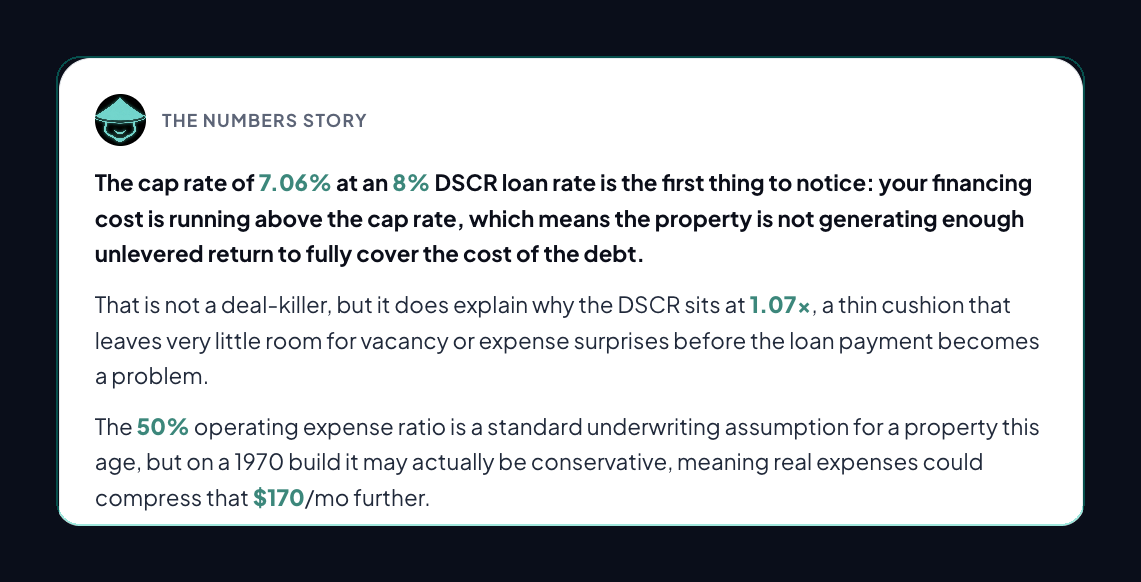
Senjo is built to be that second read at the moment of decision, not a day later. It scores how ready the deal is for an LOI, shows the reasoning behind every number so you are not trusting a result you cannot see into, and lays out the offer ladder so you can see what you would anchor on. Because it knows your profile, the read is about your constraints, not a generic answer.
It will tell you when a deal is thin just as plainly as when it clears, which is what makes the read one you can trust. It does not send the offer for you. It hands you the three things the freeze takes away: the number checked, the downside sized, the call confirmed.
How do you move through the freeze?
You take one more honest look at the deal, then you decide. Not more time. One more look, structured. Re-run the single number you are least sure of. Write the worst case in dollars, so the fear has a size. Then say out loud why you would walk.
If you cannot name a real reason to walk and the numbers clear your target, the freeze is not about the deal, so send it. If you can name a real reason, you did not freeze. You found something, and walking is a result too.
Worked example, illustrative
| Real cap rate, rebuilt | 6.2% |
| DSCR (lender wants 1.25x) | 1.33x |
| Cash flow after debt service | + $1,100 / mo |
| Cash on cash return | 8.5% |
Figures are illustrative and rounded, chosen to show a deal that clears every gate. The point is not the numbers. It is that every line can say go and the offer can still sit unsent.
Frequently asked
Is it normal to freeze before sending an offer?
Yes, and it is common. It usually means you are deciding alone, not that the deal is bad. The fix is a second read on the deal, not more time sitting with it.
Should I trust my hesitation?
Sometimes. Hesitation is information. Separate a sound caution, like a number you have not verified, from a reflex, which is fear with no specific cause. The first is worth acting on. The second is worth naming and moving past.
How do I know if a deal is ready for an LOI?
When the real numbers clear your target, you can size the worst case in dollars, and you can state why you would walk. If all three are true and you still cannot name a reason to walk, it is ready.
Will a deal analysis tool remove the fear?
No tool removes fear. A second read on the deal can remove the uncertainty that feeds it, which is usually what is actually in the way.
Senjo is an AI sensei for solo multifamily investors. Fernando, its founder, owns two single family rentals and is working toward his first small multifamily deal, building the tool he needed when he got stuck between the two.